
Received a GST Notice? We’ve Got You Covered. Expert Handling of GST Notices & Scrutiny
Don’t panic. Our expert Chartered Accountants analyze your GST notice, draft accurate replies, and handle the matter professionally—on time and fully compliant.
Why Choose Us
GST notices handled by experienced Chartered Accountants
Professional drafting of replies & submissions
Strong legal & financial justification
Timely response to avoid penalties
Department representation & follow-up
End-to-end notice closure support
GST Notices
GST Notices are official communications from GST Authorities to taxpayers. They serve to remind or caution taxpayers about detected defaults in GST compliance or to request additional information. Responding promptly to these notices within the specified timeframe is crucial. Failure to do so may result in legal consequences such as prosecution or penalties for willful default. Hence, taxpayers must handle GST notices diligently and ensure compliance.
At Charter 24, our team of experts is dedicated to helping you navigate the complexities of GST notices. Whether you've received a notice or anticipate one, we're here to assist you in preparing and submitting your response effectively.
What is GST Notice?
Notices under GST serve as official communications from GST Authorities to taxpayers. These notices serve various purposes, including reminders of detected defaults in compliance with GST laws or requests for additional taxpayer information. They are crucial in maintaining tax compliance and ensuring the proper functioning of the GST system.
These notices may go by different names, the specific type of notice depends on factors such as the nature of the default detected or the actions required from the taxpayer. Common grounds for receiving notices include failure to register under GST when required by law, late or non-filing of GST returns, underpayment or non-payment of GST, and incorrect claims of Input Tax Credit. Upon receiving a notice, taxpayers must respond promptly within the specified timeframe.
Types of GST Notices
As mentioned above, in the context of Goods and Services Tax (GST) in India, taxpayers may receive various notices from the tax authorities. Some common types include:
Show Cause Notice (SCN): This is issued by the tax authorities to a taxpayer when they suspect that there has been a violation of GST laws or incorrect reporting of transactions. The taxpayer must provide a valid explanation or justification within a specified period.
Demand Notice: A demand notice is issued when the tax authorities determine a tax liability due from the taxpayer. This notice specifies the amount of tax due along with any applicable interest or penalties.
Scrutiny Notice: A scrutiny notice is sent to a taxpayer when the tax authorities examine the taxpayer's GST returns or other documents in detail to ensure compliance with GST laws. This may involve a thorough examination of the taxpayer's records and transactions.
Assessment Notice: This notice is issued by the tax authorities after assessing the taxpayer's GST liability based on the information provided in the GST returns and any other relevant documents. It specifies the final amount of tax liability, including any adjustments or corrections made by the tax authorities.
Recovery Notice: If a taxpayer fails to pay the tax liability as per the demand notice, a recovery notice may be issued, specifying the outstanding amount and initiating steps for recovery, including attachment of assets or bank accounts.
Notice for Personal Hearing: In certain cases, the tax authorities may summon the taxpayer for a personal hearing to present their case or provide additional information in response to any discrepancies or issues identified during the assessment or scrutiny process.
Taxpayers must respond to these notices promptly and provide accurate information and documents as required by the tax authorities to avoid any adverse consequences, such as penalties or prosecution for non-compliance.
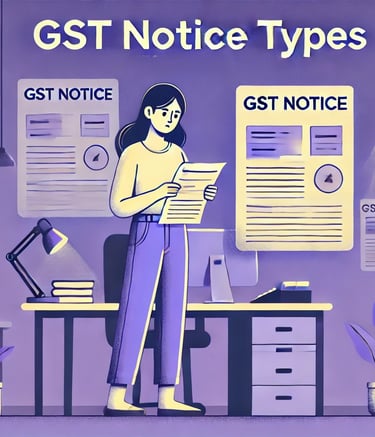
Common Reasons for Receiving GST Notices
Below are the primary reasons why GST authorities might issue notices:
Discrepancies between details reported in GSTR-1 and GSTR-3B lead to a scrutiny notice.
Variances in Input Tax Credit (ITC) claims in GSTR-3B compared to GSTR-2B/2A.
Failing to file GSTR-1 and GSTR-3B for over six months consecutively.
Mismatches in information declared on GSTR-1 and the e-way bill portal.
Prices are not lowering following a GST rate cut as mandated by the Central Board of Indirect Taxes and Customs (CBIC), constituting profiteering and violating consumer rights to benefit from reduced rates.
Non-payment or underpayment of GST, potentially leading to a show cause notice (SCN), regardless of fraudulent intent.
Inappropriate claims for GST refunds, with or without fraudulent intent, attracting a show cause notice (SCN).
Incorrect availing or use of Input Tax Credit.
Operating without GST registration when required and not fulfilling tax and other obligations under the GST Act.
Reporting inconsistencies for exports in GSTR-1, especially when shipping or export bills are lodged in ICEGATE but not reflected in GSTR-1.
Failure to provide required record-keeping information to tax authorities.
Undergoing audits conducted by tax authorities.
Not submitting information returns to tax authorities within the prescribed timeframe.
Reply to GST Notices
To navigate the process of responding to GST notices efficiently, follow these essential steps:
Review the Notice: Carefully read the GST notice to understand the issue or discrepancy highlighted by the tax authorities.
Gather Documentation: Collect all relevant documents, records, and evidence that pertain to the matter raised in the notice.
Access the GST Portal: Log in to the GST portal to prepare your response. Ensure you have the necessary login credentials and access rights.
Use Digital/E-Signature: Authenticate your submission with your digital signature or e-signature, as authorised.
Clear Dues: If the notice involves tax or interest dues, ensure these are paid according to the specified procedure before responding.
Submit Your Response: File your reply on the GST portal, attaching all necessary documentation and evidence to support your case.
Keep Records: Maintain a detailed record of all communications, submissions, and payments related to the GST notice for future reference.
Consequences of Non-Response to GST Notices
Failure to reply to GST notices within the specified time frame subjects the taxpayer to penalties and further legal actions following GST regulations based on the individual circumstances of each case (refer to the table provided above).
Choose Charter 24 for Simplified GST Solutions
Charter 24 stands out as your trusted partner in navigating the complexities of GST compliance. By facilitating effortless GST registration and meticulous GSTR filing, we proactively minimise the risk of receiving unwelcome GST notices. Should you receive any notices, there's no cause for concern. Our dedicated team of GST experts is equipped to handle the situation with precision and expertise. Our experts will craft and submit a comprehensive and compliant response to any GST notices on your behalf, ensuring that your business remains in good standing with minimal disruption. With Charter 24, you gain more than just a service provider; you gain a partner committed to safeguarding your business's compliance and success.
Ready to ensure seamless GST compliance? Contact our experts today!


Your trusted partner for business registration, legal, and tax compliance in India.
Important Links
About us
Careers
Corporate Office
B-23, Krishna Plaza, Second floor, Sarai Khwaja, Faridabad 121003
+91 9870142701
Connect.chartered24@gmail.com
© 2026 Chartered24
Client Testimonials
ICAI
ICSI
ICWI
GST
Income Tax
MCA
Registration
EXPERTISE
Business License
GST
Income Tax
Startup India
MSME
Trademark
Corporate Compliance
& More